Objective: This study aimed to compare the outcomes of spinal intradural tumor patients treated surgically in our center with the results previously reported in the
literature. Materials and Methods: The study was approved by the ethics committee of Necmettin Erbakan University and conducted in accordance with the Declaration of
Helsinki. Patient data used in the study were protected according to ethical rules and confidentiality principles. Parameters such as complaints at presentation, age,
gender, neurological examination findings, tumor localization, extent of resection, histopathological diagnosis, Modified McCormick Scale (MMS), as well as operation
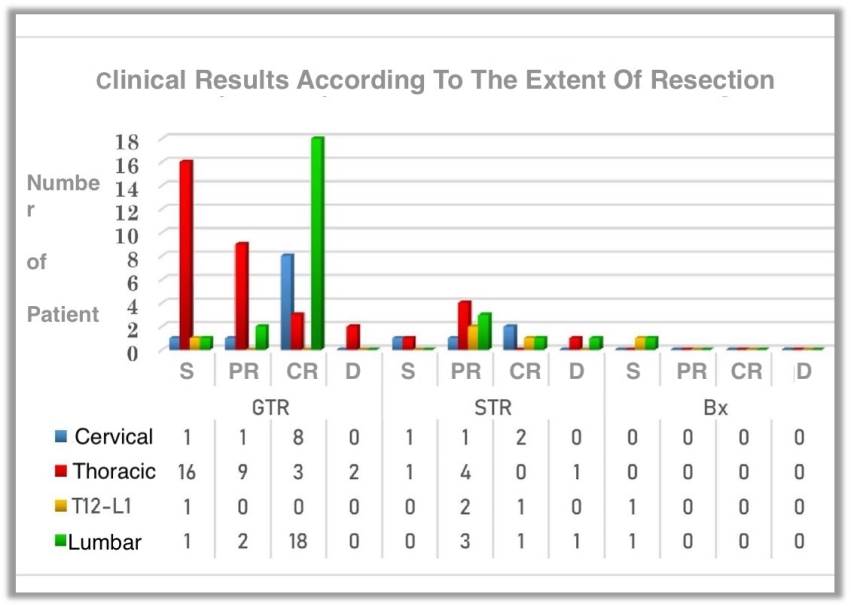
method and complications, were evaluated. The extent of resection was analyzed in three groups as gross total resection (GTR), subtotal resection (STR) and biopsy
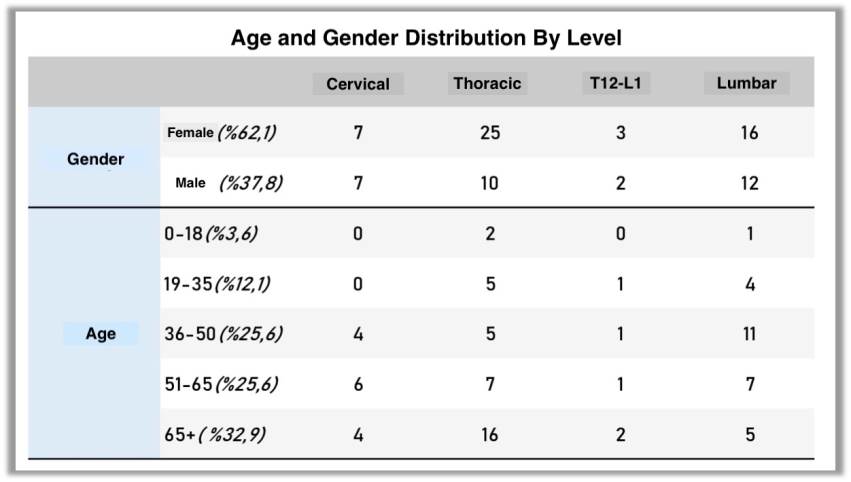
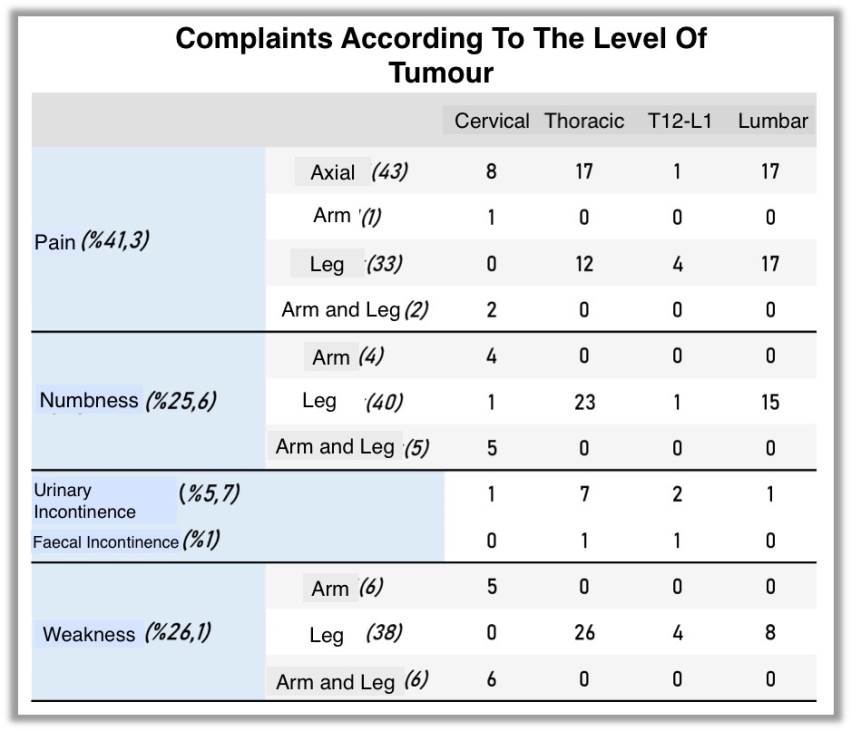
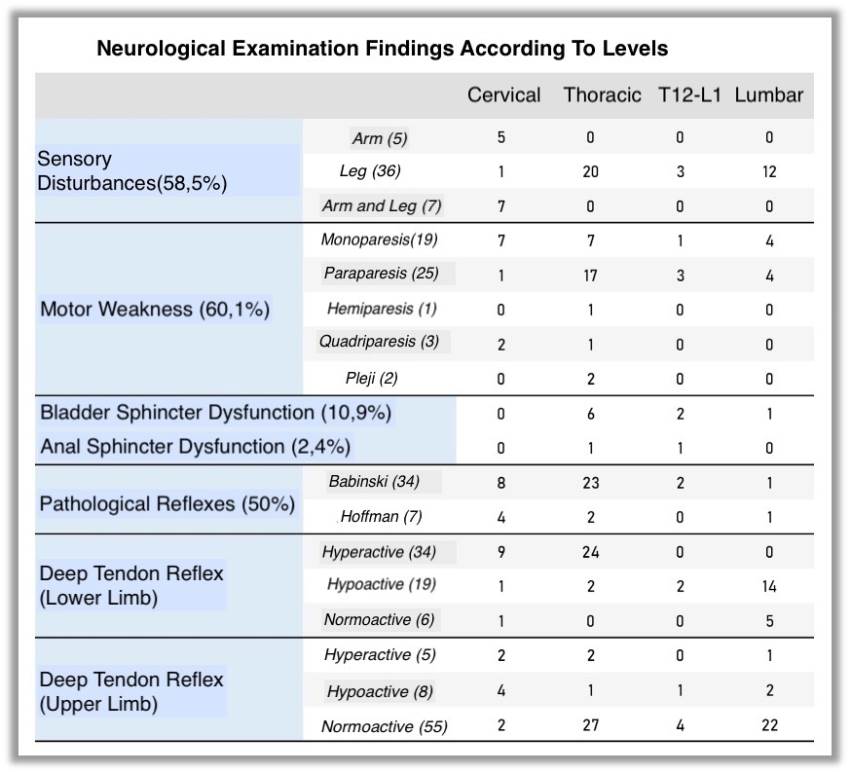
(Bx). Results: In the sample, 62.1% of the patients were female. The most common complaint was axial pain (41.3%). The most common neurological examination finding
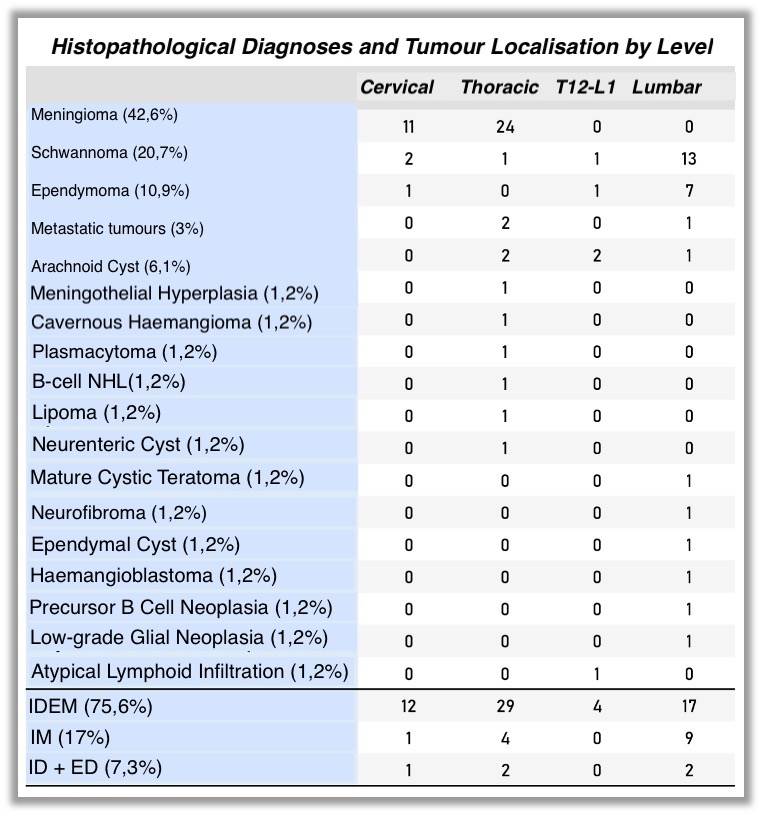
at the time of presentation across all patients was motor weakness (60.1%). Pathological examination of the tumors revealed meningiomas in 35 patients (42.6%),
schwannomas in 17 patients (20.7%), and ependymomas in 9 patients (10.9%). Most of the identified meningiomas were localized in the thoracic region, while
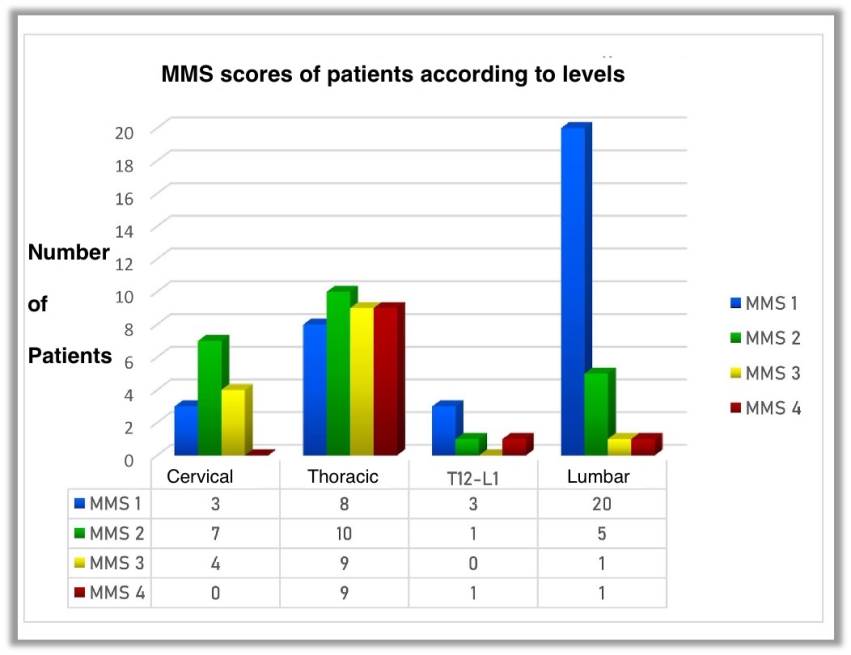
schwannomas were frequently localized in the lumbar region. The mean MMS was the highest (2.5) in patients with thoracally located masses. Partial or complete
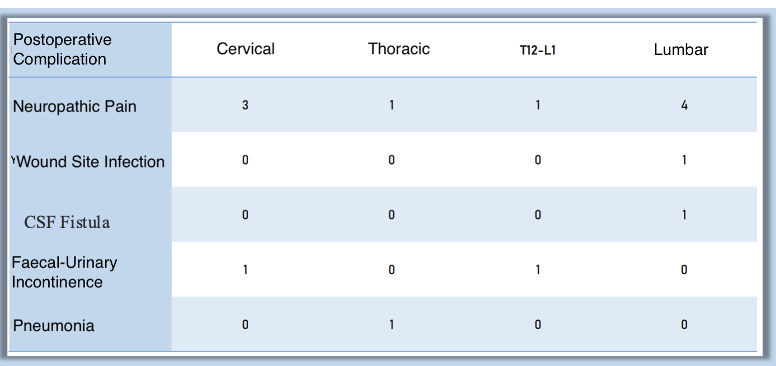
recovery was observed in 67% of the patients who underwent surgical treatment. The most common postoperative complication was neuropathic pain (10.9%). Conclusion: Spinal tumor surgery is difficult and requires attention. Determining the specific tumor and its exact location is important for the reduction of mortality
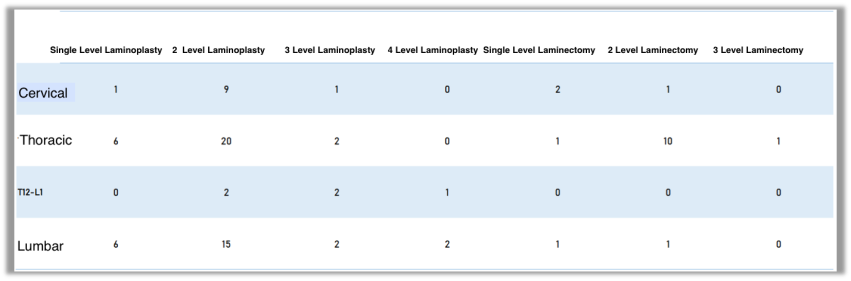
and morbidity in spinal tumors. Since excessive laminectomy during surgery may increase the risk of developing postoperative kyphosis, caution should be exercised.
If more than two levels of laminectomy are required, stabilization may be needed to maintain sagittal balance. Early diagnosis and surgical treatment are important
in patients with spinal intradural tumor.
Cite this Article As :
Kaya B, Arac D, Arslan Karagoz G, Yuksek ME, Karatas F, Keskin F. A Single Centre Retrospective Analysis of Operated Intradural Spinal Tumor Cases.
Selcuk Med J 2026;42(1): 15-20
1. Kumawat C, Takahashi T, Date I, et al. State-of-the-art and new treatment approaches for spinal cord tumors. Cancers. 2024;16(13):2360. doi: 10.3390/cancers16132360
2. Dea N, Gokaslan Z, Choi D, et al. Spine oncology primary spine tumors. Neurosurgery. 2017;80(3Suppl):124–130. doi: 10.1093/neuros/nyw064
3. Gazzeri R, Telera S, Galarza M, et al. Surgical treatment of intramedullary spinal cord metastases: functional outcome and complications-a multicenter study. Neurosurg Rev. 2021;44(6):3267–3275. doi: 10.1007/s10143-021-01491-8
4. Pahwa B, Singh G, Kale SS. The 4S of spinal astrocytoma: specific location, syrinx, spasticity and score on modified mccormick scale (MMS) predict long term outcomes in patients undergoing surgical resection of intramedullary spinal astrocytomas. J Neurooncol. 2025;171(1),131–138. doi: 10.1007/s11060-024-04839-4
5. Baykaner K, Çeviker N, Orbay T. Spinal tumors (rewiew of 59 cases). Turk Neurosurg. 1989;1:15–6.
6. Temiz Ç, Kural C, Kırık A, et al. Spinal tümörler ve cerrahi tedavi sonuçları: retrospektif çalışma. Fırat Tıp Derg. 2011;16(4),179-185.
7. Ottenhausen M, Ntoulias G, Bodhinayake I, et al. Intradural spinal tumors in adults-update on management and outcome. Neurosurg Rev. 2019;42(2),371–388. doi: 10.1007/s10143-018-0957-x
8. Elsamadicy AA, Reeves BC, Craft S, et al. A current review of spinal meningiomas: epidemiology, clinical presentation and management. J Neurooncol. 2023;161(2),395–404. doi: 10.1007/s11060-023-04238-1.
9. Solero CL, Fornari M, Giombini S, et al. Spinal meningiomas: review of 174 operated cases. Neurosurgery. 1989;25(2),153–160. PMID: 2671779
10. Swiatek VM, Stein KP, Cukaz HB, et al. Spinal intramedullary schwannomas-report of a case and extensive review of the literature. Neurosurg Rev. 2021;44(4), 1833–1852. doi: 10.1007/s10143-020-01357-5
11. Egemen E, Suzer T, Ozer A. Spinal Schwannomalar - spinal schwannomas. Turk Neurosurg. 2016;26.87-91.
12. Cooper PR. Outcome after operative treatment of intramedullary spinal cord tumors in adults: intermediate and long-term results in 51 patients. Neurosurgery. 1989;25(6),855–859. doi: 10.1097/00006123-198912000-00001
13. Kandemirli SG, Reddy A, Hitchon P, et al. Intramedullary tumors and tumor mimics. Clin Radiol. 2020;75(11),876.e17–876.e32. doi: 10.1016/j.crad.2020.05.010
 Research Paper
 View as PDF
 Keywords
Spinal Tumour, Intradural Tumour, Spinal meningiomas, Spinal Schwannomas
Keywords
Spinal Tumour, Intradural Tumour, Spinal meningiomas, Spinal Schwannomas