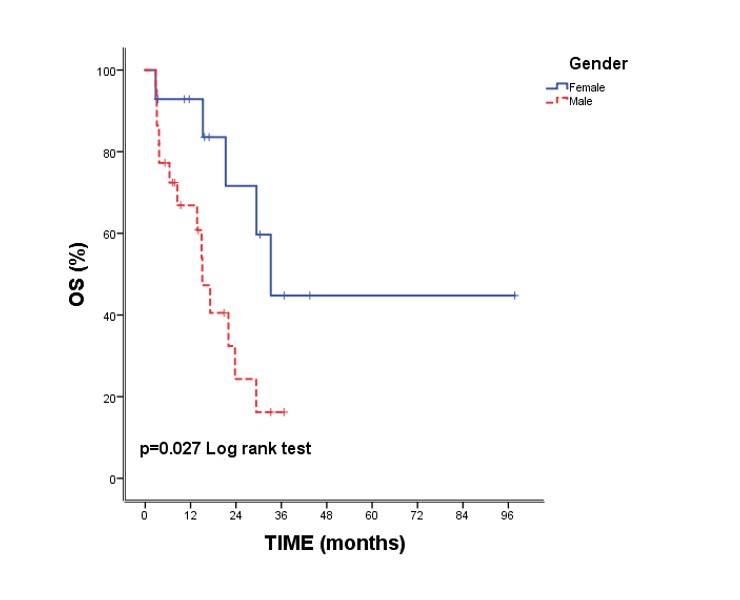
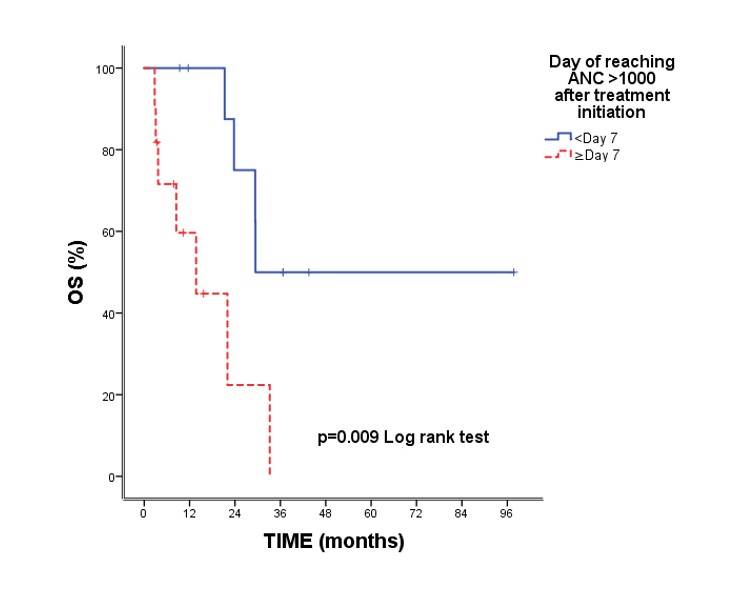
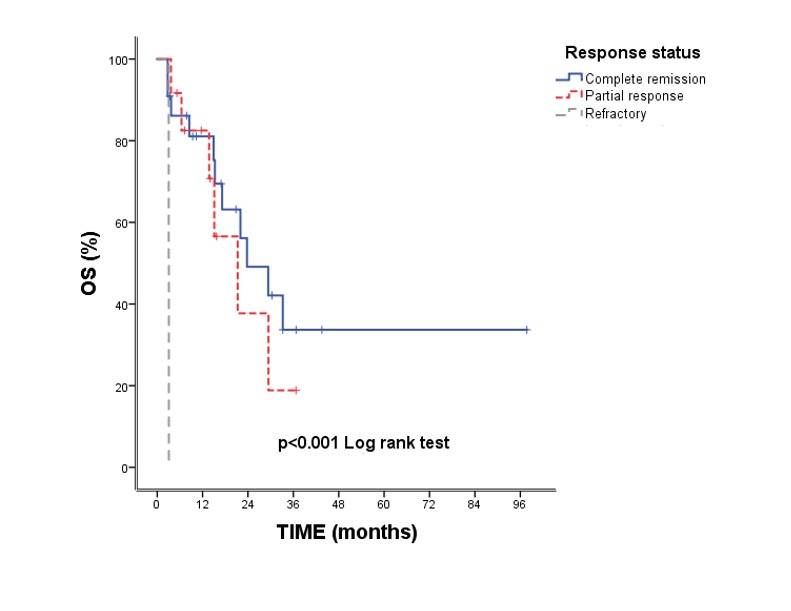
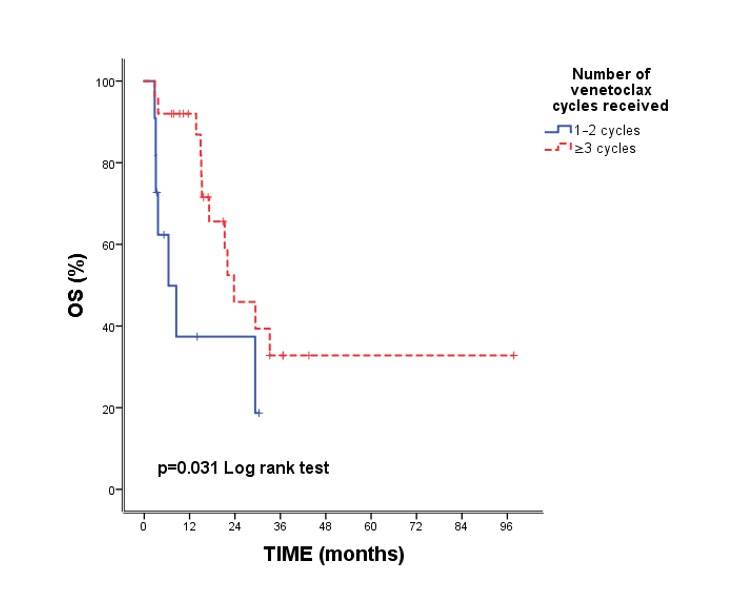
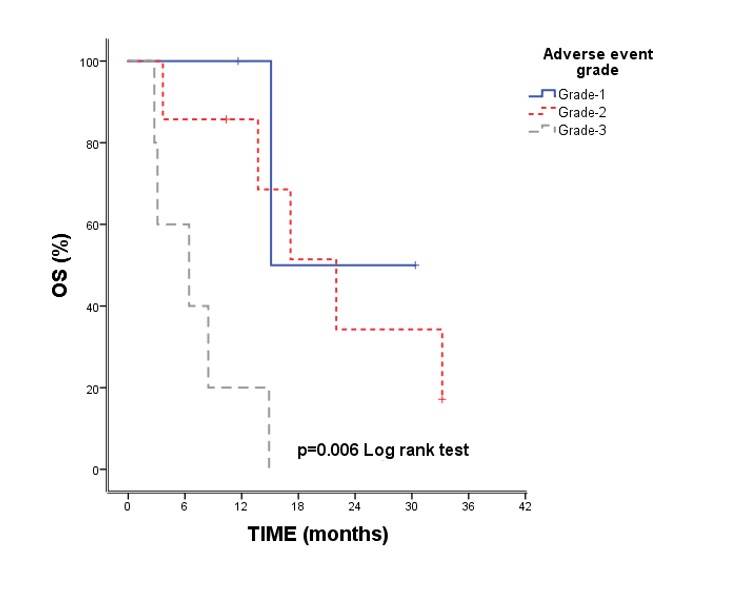
Objective: This study evaluated the real-world efficacy, safety, and survival outcomes of azacitidine-venetoclax (AZA-VEN) therapy in newly diagnosed acute myeloid leukemia (AML) patients ineligible for intensive chemotherapy. Materials and Methods: A retrospective analysis was conducted on 36 AML patients treated at two centers between 2022–2025. Data included demographics, treatment cycles, dose adjustments, response rates (complete remission, partial remission, refractory disease), hematologic recovery, side effects, and overall survival. Results: The median age was 66 years (range: 27–98), with 61.1% achieving CR. Median OS (Overall Survival) was 22 months (95% CI: 13.1–30.9), significantly longer in patients receiving ≥3 cycles (23.7 vs. 6.4 months; p=0.031) and those with early neutrophil recovery (>1000/μL by day 7: 29.4 vs. 13.7 months; p=0.009). Grade 3 toxicity (33.3% of patients) correlated with poorer survival (6.4 vs. 22 months for Grade 2; p=0.006). No invasive fungal infections occurred. Conclusion: AZA–VEN is effective and safe in chemotherapy-ineligible AML, providing survival outcomes that are comparable to, and in some aspects even consistent with, those observed in pivotal clinical trials. Our findings indicate that extended therapy, especially in patients who were able to continue for three or more cycles, was associated with a meaningful improvement in overall survival, thereby emphasizing the importance of maintaining treatment continuity whenever possible. The complete absence of invasive fungal infections in our cohort, in contrast to the variable rates reported in previous studies, suggests that our prophylaxis strategy may have contributed positively and could be of clinical relevance. In addition, the female survival advantage observed in our study, while noteworthy, should be interpreted with caution, considered as hypothesis-generating, and further validated in larger, well-designed studies.
Cite this Article As :
Beyler O, Akgul N, Yilmaz Tekinhatun H, Dogan A, Demir C. Azacitidine and Venetoclax Treatment in Acute Myeloid Leukemia: Real-Life Experience. Selcuk Med J 2025;41(4): 217-221
1. Khoury JD, Solary E, Abla O, et al. The 5th edition of the World Health Organization Classification of Haematolymphoid Tumours: Myeloid and Histiocytic/Dendritic Neoplasms. Leukemia. 2022;36(7):1703‐1719. doi:10.1038/s41375-022-01613-1
2. Döhner H, Wei AH, Appelbaum FR, et al. Diagnosis and management of AML in adults: 2022 recommendations from an international expert panel on behalf of the ELN. Blood. 2022;140(12):1345‐1377. doi:10.1182/blood.2022016867
3. Maiti A, DiNardo CD, Wang SA, et al. Prognostic value of measurable residual disease after venetoclax and decitabine in acute myeloid leukemia. Blood Adv. 2021;5(7):1876‐1883. doi:10.1182/bloodadvances.2020003717
4. DiNardo CD, Jonas BA, Pullarkat V, et al. Azacitidine and Venetoclax in previously untreated acute myeloid leukemia. N Engl J Med. 2020;383(7):617‐629. doi:10.1056/NEJMoa2012971
5. Wei AH, Panayiotidis P, Montesinos P, et al. 6-month follow-up of VIALE-C demonstrates improved and durable efficacy in patients with untreated AML ineligible for intensive chemotherapy (141/150). Blood Cancer J. 2021;11(10):163. doi:10.1038/s41408-021-00555-8
6. Pratz KW, Jonas BA, Pullarkat V, et al. Long-term follow-up of VIALE-A: Venetoclax and azacitidine in chemotherapy-ineligible untreated acute myeloid leukemia. Am J Hematol. 2024;99(4):615‐624. doi:10.1002/ajh.27246
7. Rausch CR, DiNardo CD, Maiti A, et al. Duration of cytopenias with concomitant venetoclax and azole antifungals in acute myeloid leukemia. Cancer. 2021;127(14):2489‐2499. doi:10.1002/cncr.33508
8. Bulduk T, Cömert M, Kılıç E, et al. Real-life data of azacitidine-venetoclax combination in acute myeloid leukemia patients: A single center experience. J Health Sci Med. 2023;6(6):1237‐1243. doi:10.32322/jhsm.1359253
9. Pratz KW, Wei AH, Pollyea DA, et al. Management of neutropenia during venetoclax-based combination treatment in patients with newly diagnosed acute myeloid leukemia. Blood. 2019;134(Suppl 1):3897. doi:10.1182/blood-2019-124185
10. Weinbergerová B, Mayer J, Kabut T, et al. Fungal infection frequency in newly diagnosed acute myeloid leukaemia patients treated with venetoclax plus azacitidine with or without antifungal prophylaxis. Br J Haematol. 2024;205(5):1746‐1750. doi:10.1111/bjh.19670
11. On S, Rath CG, Lan M, et al. Characterisation of infections in patients with acute myeloid leukaemia receiving venetoclax and a hypomethylating agent. Br J Haematol. 2022;197(1):63‐70. doi:10.1111/bjh.18051
12. Chen EC, Liu Y, Harris CE, et al. Outcomes of antifungal prophylaxis for newly diagnosed AML patients treated with a hypomethylating agent and venetoclax. Leuk Lymphoma. 2022;63(8):1934‐1941. doi:10.1080/10428194.2022.2047964
13. Jiwani S. An overview of EHA guidelines for the use of antifungal prophylactic agents in acute myeloid leukemia. Access link: https://aml-hub.com/medical-information/an-overview-of-eha-guidelines-for-the-use-of-antifungal-prophylactic-agents-in-acute-myeloid-leukemia. Accessed on: September 5, 2025.
 Research Paper
 View as PDF
 Keywords
Acute Myeloid Leukemia, Azacitidine, Venetoclax, Real-World Data, Survival