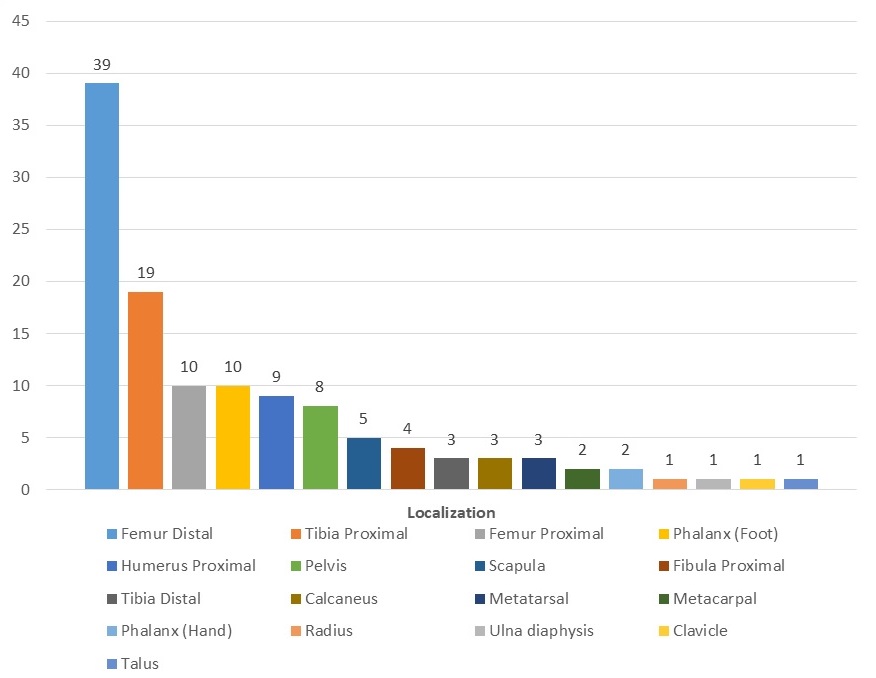
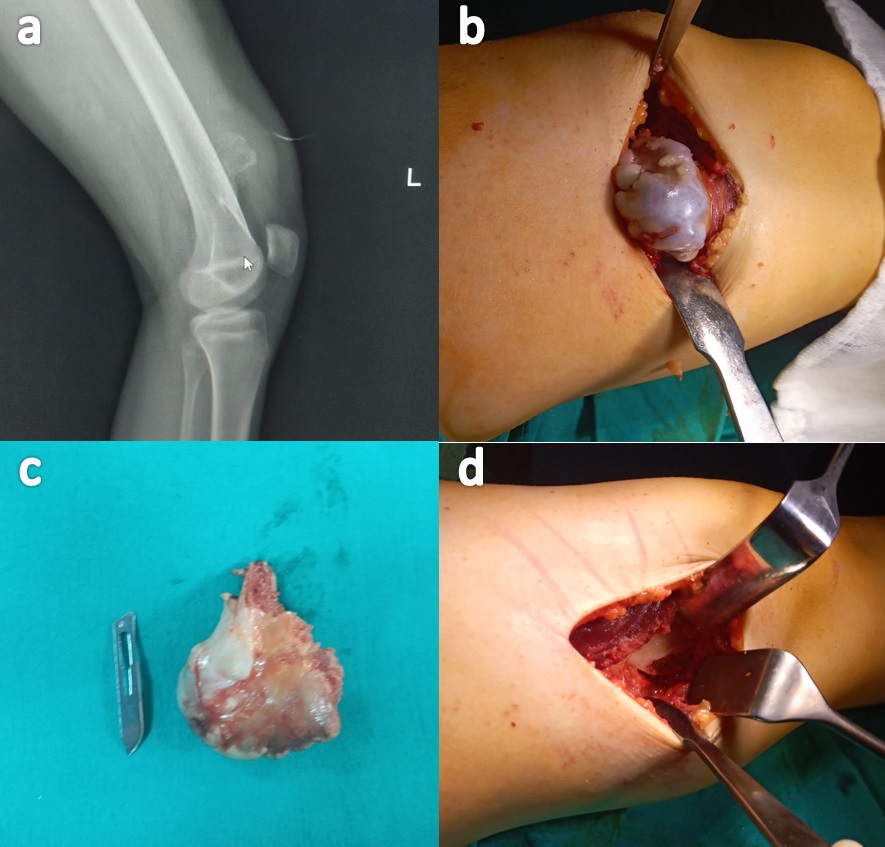
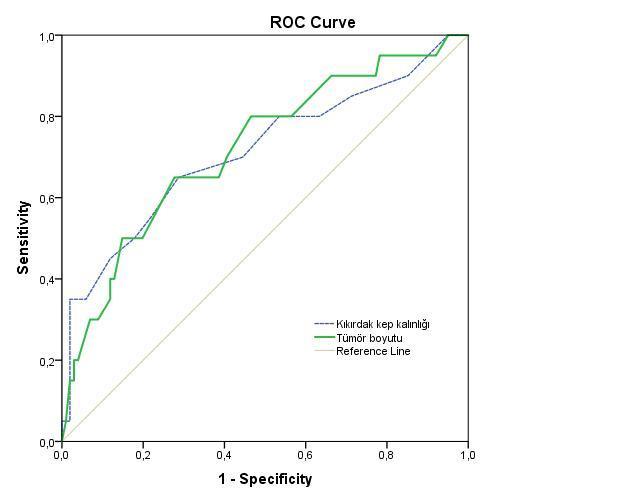
Abstract Aim: The aim of this study is to present the demographic data, diagnostic and treatment methods of tumors, and postoperative clinical outcomes of 121 patients diagnosed with osteochondroma who underwent surgical treatment at a tertiary oncology center. Patients and Methods: A total of 121 patients between 18 and 65 years of age, diagnosed with osteochondroma and treated surgically, with a minimum follow-up period of 1 year, were retrospectively included in the study between 2009 and 2019. The tumor size and cartilage cap thickness were analyzed with ROC analysis to determine significant cutoff values for distinguishing hereditary tumors from solitary tumors. Results: The average age of the patients was 31.7±12.9 years, and 57% of the patients were male. The mean tumor size was calculated as 43.4 mm, and the mean cartilage cap thickness was 7.1 mm. In addition, hereditary osteochondroma was diagnosed in 16.5% of the patients, and chondrosarcoma resulting from malignant transformation was detected in 1.7% of the cases. The tumor size and cartilage cap thickness in patients with hereditary osteochondroma were significantly higher than in solitary cases. The tumor size and cartilage cap thickness were identified as important indicators for distinguishing hereditary tumors from solitary tumors. ROC analysis resulted in a cutoff value of 7.5 mm for cartilage cap thickness and 49 mm for tumor size. Conclusion: Osteochondroma treatment can generally be successfully managed with surgical intervention, and postoperative complications are rare. This study provides important information to support clinical decisions in the treatment and follow-up of osteochondroma patients. Keywords: Osteochondroma, exostosis, total excision, cartilage cap
Cite this Article As :
Simsek MA, Yapar A, Atalay IB, Selcuk H, Gungor BS. Patient Management And Surgical Results In Osteocondroma Cases. Selcuk Med J 2023;39(4): 157-163
 Research Paper
 View as PDF
 Keywords
osteokondrom, ekzositoz, total eksizyon, kıkırdak kep
Keywords
osteokondrom, ekzositoz, total eksizyon, kıkırdak kep