ABSTRACT
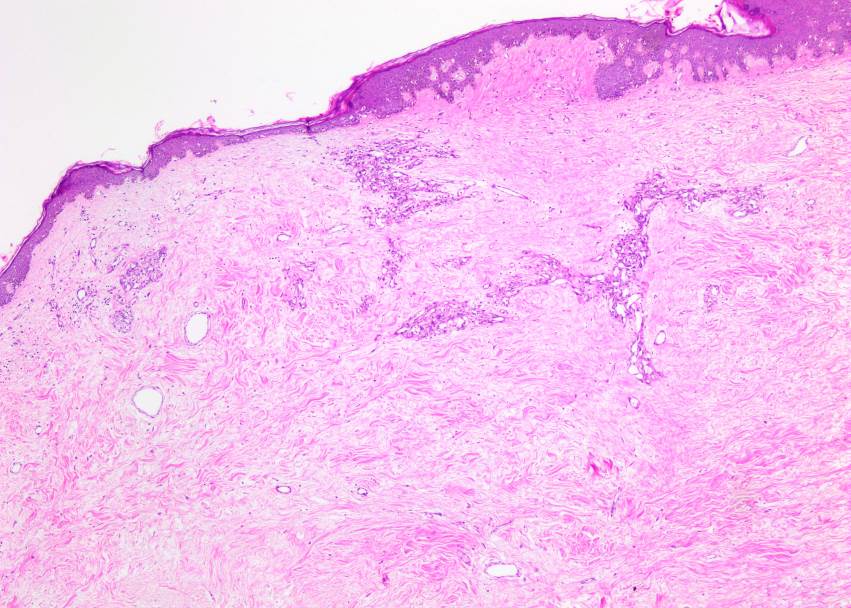
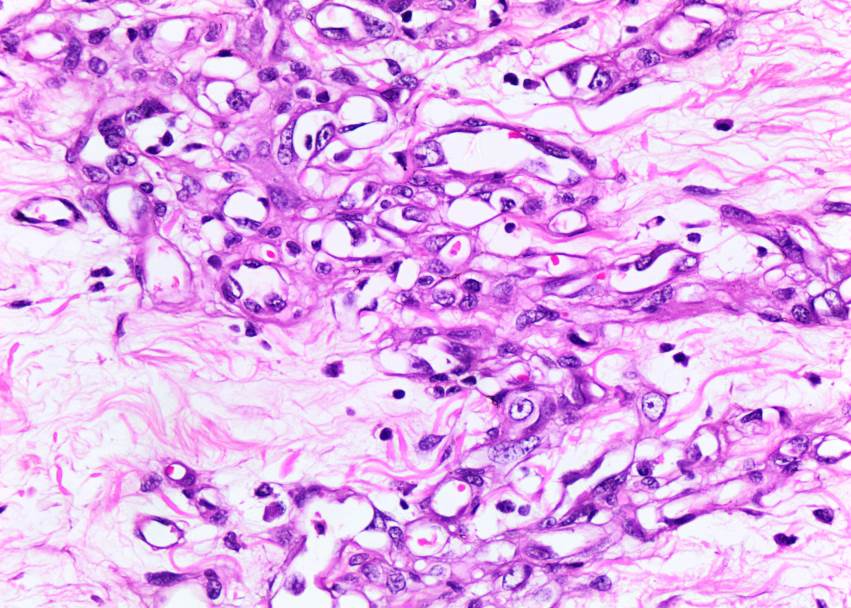
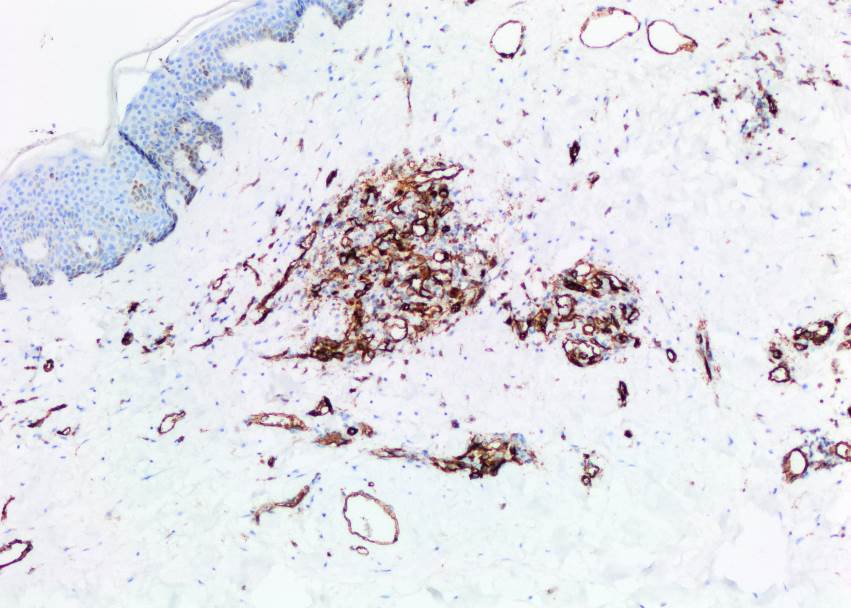
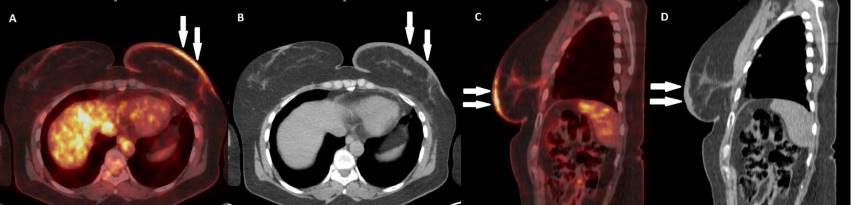
Introduction: Breast angiosarcoma is a rare tumor arising from the vascular endothelium, accounting for approximately 1% of all soft tissue breast tumors and carrying poor prognosis. It manifests in two distinct types: Primary breast angiosarcoma (PBAS) and secondary breast angiosarcoma (SBAS). PBAS typically affects young women without a history of breast cancer or radiotherapy, often originating from the breast parenchyma with occasionally skin involvement presenting as a rapidly growing, usually painless, palpable mass. In contrast, SBAS occurs in older women, originates from the breast dermis, occasionally involves the parenchyma, displays multifocality, and presents characteristic features such as skin discoloration and swelling. There is a lack of cases in the current literature reporting radiation-associated angiosarcoma of the breast with imaging findings using Fluorine-18 fluorodeoxyglucose positron emission tomography/computed tomography (FDG PET-CT ). This case report details the development of radiation-associated angiosarcoma in a 55-year-old woman who underwent breast-conserving surgery and subsequent radiotherapy for left breast cancer. Case: The patient developed radiation-associated angiosarcoma 48 months after radiotherapy, with non-specific mammographic and ultrasound features. FDG PET-CT revealed increased FDG uptake in the breast skin and nodular lesions. Pathological examination of the nodules with increased FDG uptake confirmed radiation-induced breast angiosarcoma. The patient underwent a total mastectomy for treatment. Conclusion: In patients with a history of breast-conserving surgery and radiotherapy, presenting symptoms during follow-up should prompt consideration of radiation-associated angiosarcoma. Early diagnosis is crucial, and FDG PET-CT can be beneficial for local visualization and distant organ metastasis screening. Keywords: Radiation-associated angiosarcoma, breast-conserving surgery, radiotherapy, FDG PET-CT
Cite this Article As :
Erol M, Sen AE, Eren Karanis MI. Radiation-Induced Angiosarcoma of the Breast: A Case Report with FDG PET/CT Imaging Findings. Selcuk Med J 2024;40(2): 94-97
1.Yin M, Wang W, Drabick JJ, et al. Prognosis and treatment of non-metastatic primary and secondary breast angiosarcoma: a comparative study. BMC Cancer 2017;17(1):295.
2.Koerner F. Sarcoma. Rosen’s Breast Pathology. 4th ed. Philadelphia, PA: LWW, Wolters Kluwer; 2014. p. 1118-26.
3.Bentley H, Roberts J, Hayes M, et al. The Role of Imaging in the Diagnosis of Primary and Secondary Breast Angiosarcoma: Twenty-Five-Year Experience of a Provincial Cancer Institution. Clin Breast Cancer 2023;23(2):e45–e53.
4.Rombouts AJM, Huising J, Hugen N, et al. Assessment of Radiotherapy-Associated Angiosarcoma After Breast Cancer Treatment in a Dutch Population-Based Study. JAMA Oncol 2019;5(2):267–9.
5.Mergancová J, Lierová A, Coufal O, et al. Radiation-associated angiosarcoma of the breast: An international multicenter analysis. Surg Oncol 2022;41:101726.
6.Cassou-Mounat T, Champion L, Bozec L, et al. Primary and Secondary Breast Angiosarcoma: FDG PET/CT Series. Clin Nucl Med 2019;44:e3310.
7. D'Angelo SP, Antonescu CR, Kuk D, et al. High-risk features in radiation-associated breast angiosarcomas. Br J Cancer 2013;109(9):2340–6.
8. Kanyılmaz G, Aktan M, Benli Yavuz B, et al. Five-Year Treatment Results and Prognostic Factors in Breast Cancer: Single-Center Experience. Selcuk Med J 2017 2017;33(1): 5-9.
9.Bonito FJP, de Almeida Cerejeira D, Dahlstedt-Ferreira C, et al. Radiation-induced angiosarcoma of the breast: a review. Breast J 2020;26(3):458-63.
10.Alves I, Marques JC. Radiation-Induced Angiosarcoma of the Breast: A Retrospective Analysis of 15 Years’ Experience at an Oncology Center. Radiol Bras 2018;51:281–6.
11.Mermershtain W, Cohen AD, Koretz M, et al. Cutaneous Angiosarcoma of Breast after Lumpectomy, Axillary Lymph Node Dissection, and Radiotherapy for Primary Breast Carcinoma: Case Report and Review of the Literature. Am J Clin Oncol 2002;25:597–8.
12.Liu X, Zheng S, Li Y, et al. Use of Extended Field-of-View Ultrasound Imaging in Giant Primary Breast Angiosarcoma: A Case Description. Quant Imaging Med Surg 2022;12:868–73.
13.Salminen SH, Sampo MM, Böhling TO, et al. Radiation-associated angiosarcoma of the breast: analysis of diagnostic tools in a registry-based population. Acta Radiol 2022;63(1):22-7.
14.National Comprehensive Cancer Network. NCCN Clinical Practice Guidelines in Oncology: Breast Cancer. Version 1.2022. [Internet]. Available from: http://www.nccn.org/professionals/physician_gls/f_guidelines.asp.
15.Fraga-Guedes C, Gobbi H, Mastropasqua MG, et al. Primary and secondary angiosarcomas of the breast: a single institution experience. Breast Cancer Res Treat 2012;132:1081-88.
 Case Report
 View as PDF
 Keywords
Radiation-associated angiosarcoma, breast-conserving surgery, radiotherapy, FDG PET-CT