ÖZ
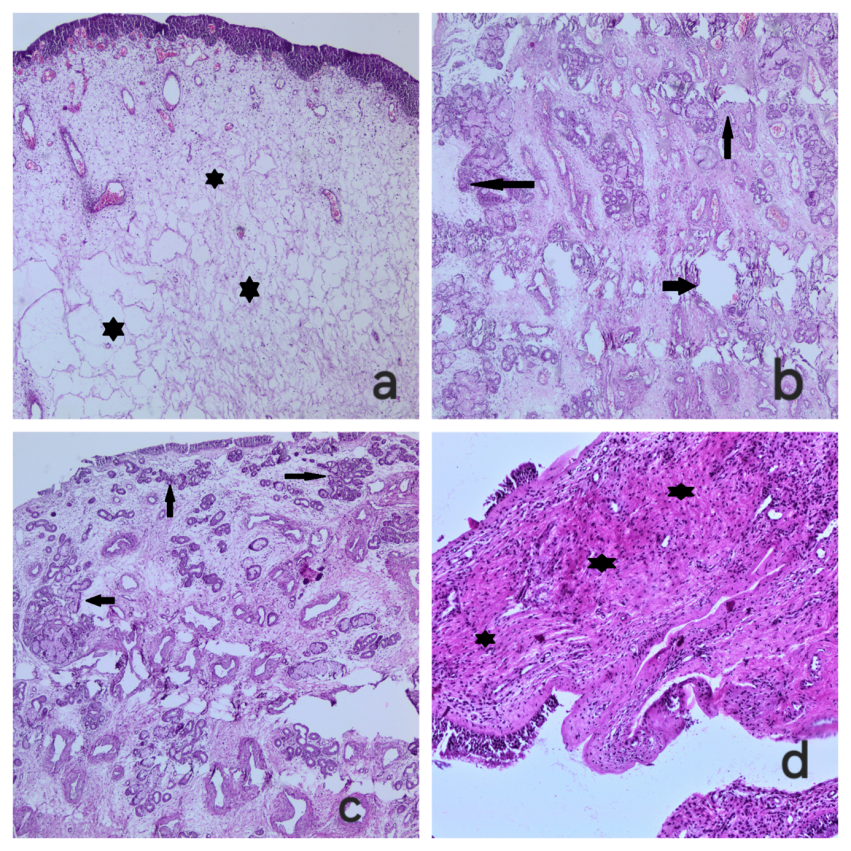
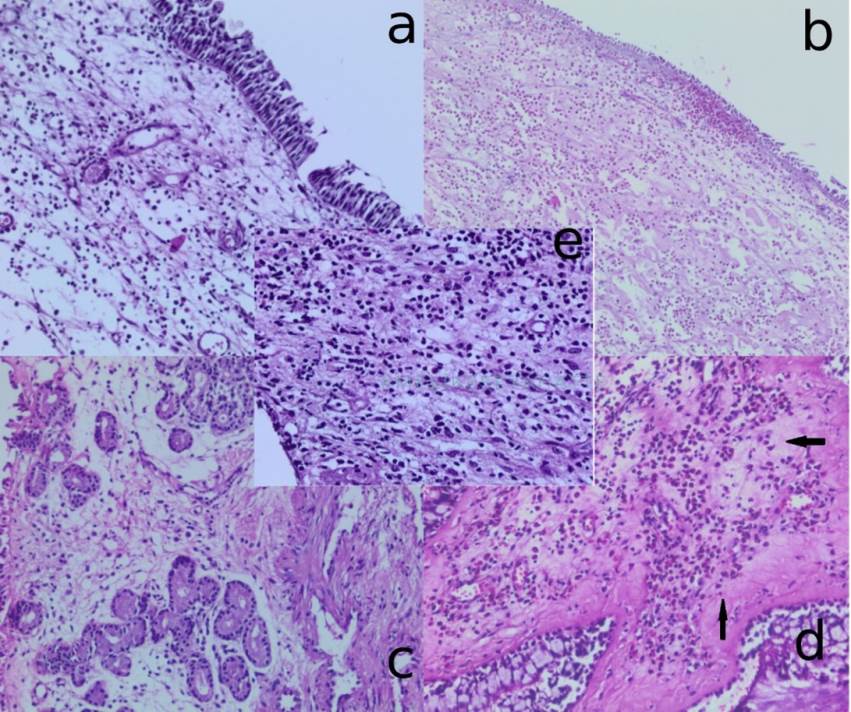
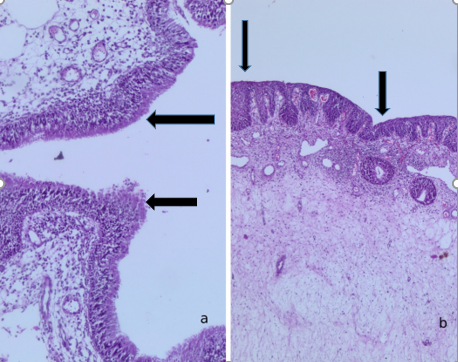
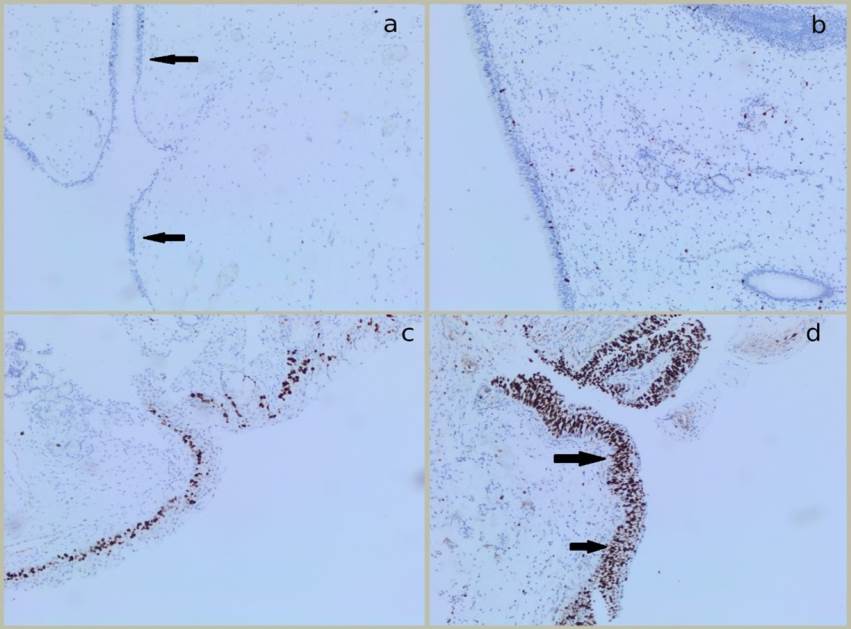
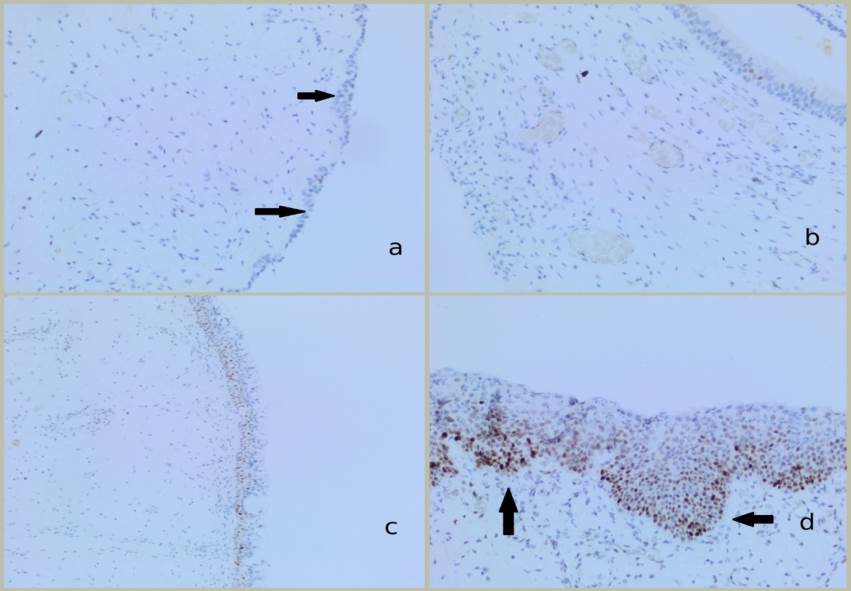
Amaç: Bu çalışmada Türk toplumunda Nazal poliplerin (NP) sigara içimi, proliferatif süreçler ve enflamasyon ile ilişkisini histopatolojik ve klinik parametreler doğrultusunda detaylı bir şekilde değerlendirmeyi amaçladık. Gereçler ve Yöntem: Mart-Ağustos 2021 tarihleri arasında hastanemizde endoskopik sinüs cerrahisi yapılan 36’sı erkek, 19’u kadın toplam 55 nazal polip hastasının patolojik materyalleri incelendi. Hematoksilin ve Eozin (H&E) boyama ile histolojik alt tipler skuamöz metaplazi, epiteliyal hiperplazi gibi histolojik değişikliklerin değerlendirilmesi yapıldı. Ayrıca eozinofil, nötrofil, lenfosit oranları ve yoğunluğu gibi çeşitli inflamatuar durumları değerlendirildi. Bununla birlikte, dokularda sigara içimi ile ilgili gelişebilecek proliferatif değişiklikler immünohistokimya (İHK) yöntemi ile Ki-67 ve p53 boyama değerlendirmeleri yapılarak araştırıldı. Hastane sisteminden elde edilen klinik bilgiler, laboratuvar sonuçları ve Lund-Mackay sınıflaması verileri dahil edildi. Çalışmada R 4.2.2 programı kullanılarak Ki-Kare ve Fisher testleri ile T-testi analizleri gerçekleştirildi. Bulgular: Hastaların yaş ortalaması 37,22±16.96’dir. Bunlardan 34’ü (61,82%) sigara içmezken, 21’i (38,18%) sigara içmekteydi. Sonuçlarımızda sigara içenlerde ve Lund-Mackay sınıflaması puanı yüksek olanlarda eozinofilik infiltrasyon ile anlamlı bir ilişki gösterdi (p<0.05). Ayrıca, Lund-Mackay puanı yüksek olanlarda eozinofilik ve lenfoplazmositik inflamasyon türleri ile de anlamlı korelasyon saptandı (p<0.05). Nazal poliplerde skuamöz metaplazinin bulunması ile Ki-67 ve p53 immünhistokimyasal boyanma skorları arasında anlamlı ilişki bulunurken, epiteliyal hiperplazi ile bu değerler arasında ilişki bulunmadı. Sonuç: Çalışmamızda nazal polip hastalarında sigara içimi ile Lund-Mackay sınıflaması sonuçları, inflamasyon tipi ve eozinofilik inflamasyon arasında ilişkiyi gösterdik. Ayrıca, proliferatif belirteçler olan Ki-67 ve p53 bulguları ile metaplazik değişiklikler ve epitel hiperplazi gelişimi arasında korelasyon tespit edildi. Türk toplumunda NP'lerdeki eozinofilik inflamasyon dereceleri Asya ve Avrupa toplumları arasında bir noktada olduğu sonucuna varıldı. Anahtar Kelimeler: Nazal polip, proliferatif süreç, sigara içimi, Ki-67, p53
Cite this Article As :
Omeroglu E, Ugur Kilinc AN, Bayramoglu Z, Unlu Y. The Evaluation of Nasal Polyps in Terms of Smoking, Proliferative Processes, and Inflammation: Cross-Sectional Study. Selcuk Med J 2025;41(3): 142-151
1- Gao T, Ng CL, Li C, Li YY, Duan C, Shen L, et al. Smoking is an independent association of squamous metaplasia in Chinese nasal polyps. Int Forum Allergy Rhinol. 2016;6(1):66-74. doi:10.1002/alr.. 21662
2-Perić A, Stoiljkov M, Đokić D, Đurđević BV. Epithelial squamous metaplasia and dysplasia in inflammatory nasal polyps: an observational study. Ear Nose Throat J. 2021;100(2):NP120-4. doi:10.1177/01455613211000232
3- Brescia G, Alessandrini L, Giacomelli L, Parrino D, Zanotti C, Tealdo G, et al. A classification of chronic rhinosinusitis with nasal polyps based on structured histopathology. Histopathology. 2020;76(2):296-307. doi:10.1111/his 13972
4-Wang Y, Song X, Jin M, Lu J. Characterization of the Immune Microenvironment and Identification of Biomarkers in Chronic Rhinosinusitis with Nasal Polyps Using Single-Cell RNA Sequencing and Transcriptome Analysis. Journal of Inflammation Research. 2024 Dec 31:253-77.
DOI: 10.2147/JIR.S328813
5-Kule ZG, Habesoglu TE, Somay A, Deveci HS, Kule M, Gursel AO. Histopathological characteristics of nasal polyps in smokers and non-smokers. Journal of Craniofacial Surgery. 2014 May 1;25(3):946-9.
DOI: 10.1097/SCS.0000000000000589
6-Vaitkus J, Vitkauskienė A, Simuntis R, Vaitkus Ž, Šiupšinskienė N, Vaitkus S. Chronic rhinosinusitis with nasal polyps: age and disease severity differences in the levels of inflammatory markers. Medicina. 2021 Mar 18;57(3):282.
DOI: 10.3390/medicina57030282
7-Bao X, Liu B, Jiang Y, Feng T, Cao W, Shi J, et al. Loss of SENP3 mediated the formation of nasal polyps in nasal mucosal inflammation by increasing alternatively activated macrophages. Immunity, Inflammation and Disease. 2023 Feb;11(2):e781.
DOI: 10.1002/iid3.781
8-Fageeh YA, Basurrah MA, Hakami KT, Almalki ZA, Alnemari FS, Altalhi WA. Risk factors for recurrence of chronic rhinosinusitis with nasal polyps after endoscopic sinus surgery: A retrospective study. Saudi Medical Journal. 2023 Dec;44(12):1254.
DOI: 10.15537/smj.2023.44.12.20230650
9-Kim SJ, Lee KH, Kim SW, Cho JS, Park YK, Shin SY. Changes in histological features of nasal polyps in a Korean population over 17 years. Otolaryngology-Head and Neck Surgery. 2013 Sep;149(3):431-7.
DOI: 10.1177/0194599813493334
10-Ueha R, Ueha S, Kondo K, Nishijima H, Yamasoba T. Effects of cigarette smoke on the nasal respiratory and olfactory mucosa in allergic rhinitis mice. Frontiers in Neuroscience. 2020 Feb 18;14:126.
DOI: 10.3389/fnins.2020.00126
11-Mahmud A, Salisu AD, Kolo ES, Hasheem MG, Bello-Muhammad N, Tukur AR, et al. Impact of smoking on nasal mucociliary clearance time in Kano metropolis, Nigeria. World Journal of Otorhinolaryngology-Head and Neck Surgery. 2023 Mar 30;9(01):53-8.
DOI: 10.1016/j.wjorl.2023.02.004
12-Pant H, Hughes A, Miljkovic D, Schembri M, Wormald P, Macardle P, et al. Accumulation of effector memory CD8+ T cells in nasal polyps. American Journal of Rhinology & Allergy. 2013 Sep;27(5):e117-26.
DOI: 10.2500/ajra.2013.27.4075
13-Liu Y, Sha J, Meng C, Zhu D. The Role of Small Extracellular Vesicles and MicroRNAs in the Diagnosis and Treatment of Allergic Rhinitis and Nasal Polyps. Mediators of Inflammation. 2022, 4428617, 9 pages.
DOI: 10.1155/2022/4428617
14-Sarkar S, Saha R, Das M, Sardar S. Sinonasal polyps: A diagnostic challenge. Bengal Journal of Otolaryngology and Head Neck Surgery. 2019 Dec 29;27(3):243-50.
DOI: 10.5005/jp-journals-10011-1344
15-Lee HY, Lee HK, Kim SJ. Squamous Cell Carcinoma In Situ Originating From Nasal Polyps With Human Papillomavirus 51 Infection: A Case Report. Ear, Nose & Throat Journal. 2021 Dec;100(10_suppl):1054S-7S.
DOI: 10.1177/01455613211004994
16-Soklic TK, Silar M, Rijavec M, Koren A, Kern I, Hocevar-Boltezar I, et al. CD3+ CD4− CD8− mucosal T cells are associated with uncontrolled chronic rhinosinusitis with nasal polyps. Journal of Allergy and Clinical Immunology. 2019 Mar 1;143(3):1235-7.
DOI: 10.1016/j.jaci.2018.07.017
17-Iordache A, Balica NC, Horhat ID, Morar R, Tischer AA, Milcu AI, et al. Allergic rhinitis associated with nasal polyps and rhinosinusitis–histopathological and immunohistochemical study. Romanian Journal of Morphology and Embryology. 2022 Apr;63(2):413.
DOI: 10.47162/RJME.63.2.09
18-BAROUH, Alireza; NADOUSHAN, Mohammadreza Jalali; SOLTANIPUR, Masood. Comparison of proliferating Cell Nuclear Antigen (PCNA) expression among nasal polyp and chronic Rhinosinusitis. Acta Otorrinolaringologica (English Edition), 2024, 75.5: 310-315.
DOI: 10.1016/j.otoeng.2024.04.007
19-Vadivel Gnanasundram S, Bonczek O, Wang L, Chen S, Fahraeus R. p53 mRNA metabolism links with the DNA damage response. Genes. 2021 Sep 20;12(9):1446.
DOI: 10.3390/genes12091446
20-Andrés-Sánchez N, Fisher D, Krasinska L. Physiological functions and roles in cancer of the proliferation marker Ki-67. Journal of Cell Science. 2022 Jun 1;135(11):jcs258932.
DOI: 10.1242/jcs.258932
21-Lagunas‐Rangel FA, Linnea‐Niemi JV, Kudłak B, Williams MJ, Jönsson J, Schiöth HB. Role of the synergistic interactions of environmental pollutants in the development of cancer. GeoHealth. 2022 Apr;6(4):e2021GH000552.
DOI: 10.1029/2021GH000552
22-Güneş S, Akidil AÖ, Erdem İ, Olgun B, Çelik M. Correlation of Retention Cyst and Rhinosinusitis. Bakirkoy Tip Dergisi. 2019 Mar 1;15(1):65.
DOI: 10.4274/bakirkoymedj.galenos.2018.72122
23-Brescia G, Contro G, Ruaro A, Barion U, Frigo AC, Sfriso P, et al. Sex and age-related differences in chronic rhinosinusitis with nasal polyps electing ESS. American Journal of Otolaryngology. 2022 Mar 1;43(2):103342.
DOI: 10.1016/j.amjoto.2021.103342
24-Erbek SS, Erbek SE, Budakoğlu IŞ, Cakmak O. The relationship between smoking and nasal polyposis. Kulak Burun Bogaz Ihtisas Dergisi: KBB= Journal of Ear, Nose, and Throat. 2008 Jul 1;18(4):216-20.
DOI: 10.24953/kbbtr.2008.4.216
25-Lee KI, Kim DW, Kim EH, Kim JH, Samivel R, Kwon JE, et al. Cigarette smoke promotes eosinophilic inflammation, airway remodeling, and nasal polyps in a murine polyp model. American Journal of Rhinology & Allergy. 2014 May;28(3):208-14.
DOI: 10.2500/ajra.2014.28.4103
26-Lou H, Zhang N, Bachert C, Zhang L. Highlights of eosinophilic chronic rhinosinusitis with nasal polyps in definition, prognosis, and advancement. International Forum of Allergy & Rhinology. 2018 Nov (Vol. 8, No. 11, pp. 1218-1225).
DOI: 10.1002/alr.22176
27-Kuhar HN, Ganti A, Brown HJ, Gattuso P, Ghai R, Mahdavinia M, et al. Histopathologic influences of comorbid smoking status in chronic rhinosinusitis. American Journal of Rhinology & Allergy. 2020 Nov;34(6):775-83.
DOI: 10.1177/1945892420957209
28-Xie L, Liu AG, Peng LY, Wang SJ, Zhang YP, Wang XS. Expression of E-prostanoid receptors in nasal polyp tissues of smoking and nonsmoking patients with chronic rhinosinusitis. PloS One. 2018 Jul 24;13(7):e0200989.
DOI: 10.1371/journal.pone.0200989
29-Lee KI, Han Y, Ryu JS, In SM, Kim JY, Park JS, et al. Tobacco Smoking Could Accentuate Epithelial-Mesenchymal Transition and Th2-Type Response in Patients With Chronic Rhinosinusitis With Nasal Polyps. Immune Network. 2022 Aug;22(4):e35.
DOI: 10.4110/in.2022.22.e35
30-Şenocak Taşçı E, Akbaş T. The Relationship between the Sydney Classification and the First-Line Treatment Efficacy in Helicobacter-Associated Gastritis. Medical Principles and Practice. 2020 Dec 9;29(6):551-7.
DOI: 10.1159/000512806
31- Kim HJ, Ahn HS, Kang T, Bachert C, Song WJ. Nasal polyps and future risk of head and neck cancer: a nationwide population-based cohort study. J Allergy Clin Immunol. 2019;144(4):1004–1010. doi:10.1016/j.jaci.2019.06.019
32- Tezer İ, Şanlı A, Sarısoy B, Deniz SE, Barışık NO. Comparison of epithelial cell proliferation and physical examination findings of nasal polyps. Elektronik Kulak Burun Boğaz Baş Boyun Cerrahisi Dergisi. 2006;5(3):118-121. doi:10.5152/kbbihtisas.2006.118-121
33-Jeong WJ, Lee CH, Cho SH, Rhee CS. Eosinophilic allergic polyp: a clinically oriented concept of nasal polyp. Otolaryngology-Head and Neck Surgery. 2011 Feb;144(2):241-6.
DOI: 10.1177/0194599810387355
34-Laidlaw TM, Prussin C, Panettieri RA, Lee S, Ferguson BJ, Adappa ND, et al. Dexpramipexole depletes blood and tissue eosinophils in nasal polyps with no change in polyp size. The Laryngoscope. 2019 Feb;129(2): E61-6.
DOI: 10.1002/lary.27353
35-Darouassi Y, Azami MA, El-Akhiri M, Benchafai I, Hanine MA, Haouane MA, et al. Endotype of Chronic Rhinosinusitis with Nasal Polyps in Morocco. Head and Neck Pathology, 16(4), 1130-1133.
DOI: 10.1007/s12105-022-01596-4
36-Syuhada O, Shalini P, Lim WK, Ammar A, MP SH, WH AK, et al. Malaysian Nasal Polyps: Eosinophil or Neutrophil-Predominant. Medicine & Health (Universiti Kebangsaan Malaysia). 2016 Jan 1;11(1).
DOI: 10.1111/mha.12205
37-Morinaka S, Nakamura H. Inflammatory cells in nasal mucosa and nasal polyps. Auris Nasus Larynx. 2000 Jan 1;27(1):59-64.
DOI: 10.1016/S0385-8146(99)00047-5
38-Yu J, Xian M, Piao Y, Zhang L, Wang C. Changes in clinical and histological characteristics of nasal polyps in northern China over the past 2–3 decades. International Archives of Allergy and Immunology. 2021 Jun 30;182(7):615-24.
DOI: 10.1159/000514981
39-Ikeda K, Shiozawa A, Ono N, Kusunoki T, Hirotsu M, Homma H, et al. Subclassification of chronic rhinosinusitis with nasal polyp based on eosinophil and neutrophil. The Laryngoscope. 2013 Nov;123(11): E1-9.
DOI: 10.1002/lary.23985
40-Yang SK, Kim JW, Won TB, Rhee CS, Han YB, Cho SW. Differences in Clinical and Immunological Characteristics According to the Various Criteria for Tissue Eosinophilia in Chronic Rhinosinusitis With Nasal Polyps. Clinical and Experimental Otorhinolaryngology. 2023 Nov;16(4):359.
DOI: 10.21053/ceo.2022.02108
41-Lee K, Choi IH, Lee H, Choi S, Lee SH, Kim TH. Association of cotinine-verified cigarette exposure with chronic rhinosinusitis in Korean adults. International Journal of Environmental Research and Public Health. 2020 Nov;17(21):8291.
DOI: 10.3390/ijerph17218291
42-Cui Y, Wang K, Shi J, Sun Y. Endotyping Difficult-to-Treat Chronic Rhinosinusitis with Nasal Polyps by Structured Histopathology. International Archives of Allergy and Immunology. 2023 Oct 6;184(10):1036-46.
DOI: 10.1159/000529706
43-Ryu G, Kim HY, Jung YG, Hong SD. Endotypes of Asian chronic rhinosinusitis with nasal polyps: A narrative review. Precision and Future Medicine. 2022 Sep 7;6(3):170-6.
DOI: 10.20517/pfm.2022.26
44-Enache I, Ioniţă E, Anghelina F, Mogoantă CA, Ciolofan MS, Căpitănescu AN, et al. Involvement of inflammatory cells in chronic rhinosinusitis with nasal polyps. Romanian Journal of Morphology and Embryology. 2020 Jul;61(3):871.
DOI: 10.47162/RJME.61.3.02
45-Mumbuc S, Karakok M, Baglam T, Karatas E, Durucu C, Kibar Y. Immunohistochemical analysis of PCNA, Ki67, and p53 in nasal polyposis and sinonasal inverted papillomas. Journal of International Medical Research. 2007 Mar;35(2):237-41.
DOI: 10.1177/147323000703500206
46-Karagianni F, Kataki A, Koniaris E, Karamagkiolas S, Derventzi A, Giotakis E, et al. Distinctive expression profiles of Caveolin-1 and Notch-1 protein in patients with nasal polyps or sinonasal inverted papillomas. Pathology-Research and Practice. 2018 Dec 1;214(12):2004-10.
DOI: 10.1016/j.prp.2018.08.007
47-Haznedar B, Kaplan Ö, Aşır F, Ermiş I. Immune activity of Ki-67 during nasal polyp development. Eur Rev Med Pharmacol Sci. 2023 Apr 1;27(6):2759-64.
DOI: 10.26355/eurrev_202304_31828
48-Yu XM, Li CW, Li YY, Liu J, Lin ZB, Li TY, et al. Down-regulation of EMP 1 is associated with epithelial hyperplasia and metaplasia in nasal polyps. Histopathology. 2013 Nov;63(5):686-95.
DOI: 10.1111/his.12200
49-Lin YT, Tsai MH, Su YY, Chen WC, Huang SC, Chien CY. Expression of Major Lipid Raft Protein Raftlin in Chronic Rhinosinusitis with Nasal Polyps in Smoking and Non-Smoking Patients Correlated with Interleukin-17 and Tumor Necrosis Factor-α Levels. Biomolecules. 2022 Sep 17;12(9):1316.
DOI: 10.3390/biom12091316
50-Wang MJ, Noel JE. Etiology of sinonasal inverted papilloma: a narrative review. World journal of otorhinolaryngology-head and neck surgery. 2017 Mar 1;3(01):54-8.
DOI: 10.1016/j.wjorl.2017.01.004
51-Oncel S, Cosgul T, Calli A, Calli C, Pinar E. Evaluation of p53, p63, p21, p27, ki-67 in paranasal sinus squamous cell carcinoma and inverted papilloma. Indian Journal of Otolaryngology and Head & Neck Surgery. 2011 Apr;63:172-7. DOI: 10.1007/s12070-011-0163-0
52 Sham CL, To KF, Chan PK, Lee DL, Tong MC, van Hasselt CA. Prevalence of human papillomavirus, Epstein–Barr virus, p21, and p53 expression in sinonasal inverted papilloma, nasal polyp, and hypertrophied turbinate in Hong Kong patients. Head & Neck. 2012 Apr;34(4):520–33. DOI: 10.1002/hed.21772
53- Ingle RR, Setzen G, Koltai PJ, Monte D, Pastore J, Jennings TA. p53 protein expression in benign lesions of the upper respiratory tract. Arch Otolaryngol Head Neck Surg. 1997;123(3):297-300. doi:10.1001/archotol.1997.01900030071009
 Research Paper
 View as PDF
 Keywords
Nazal polip, proliferatif süreç, sigara içimi